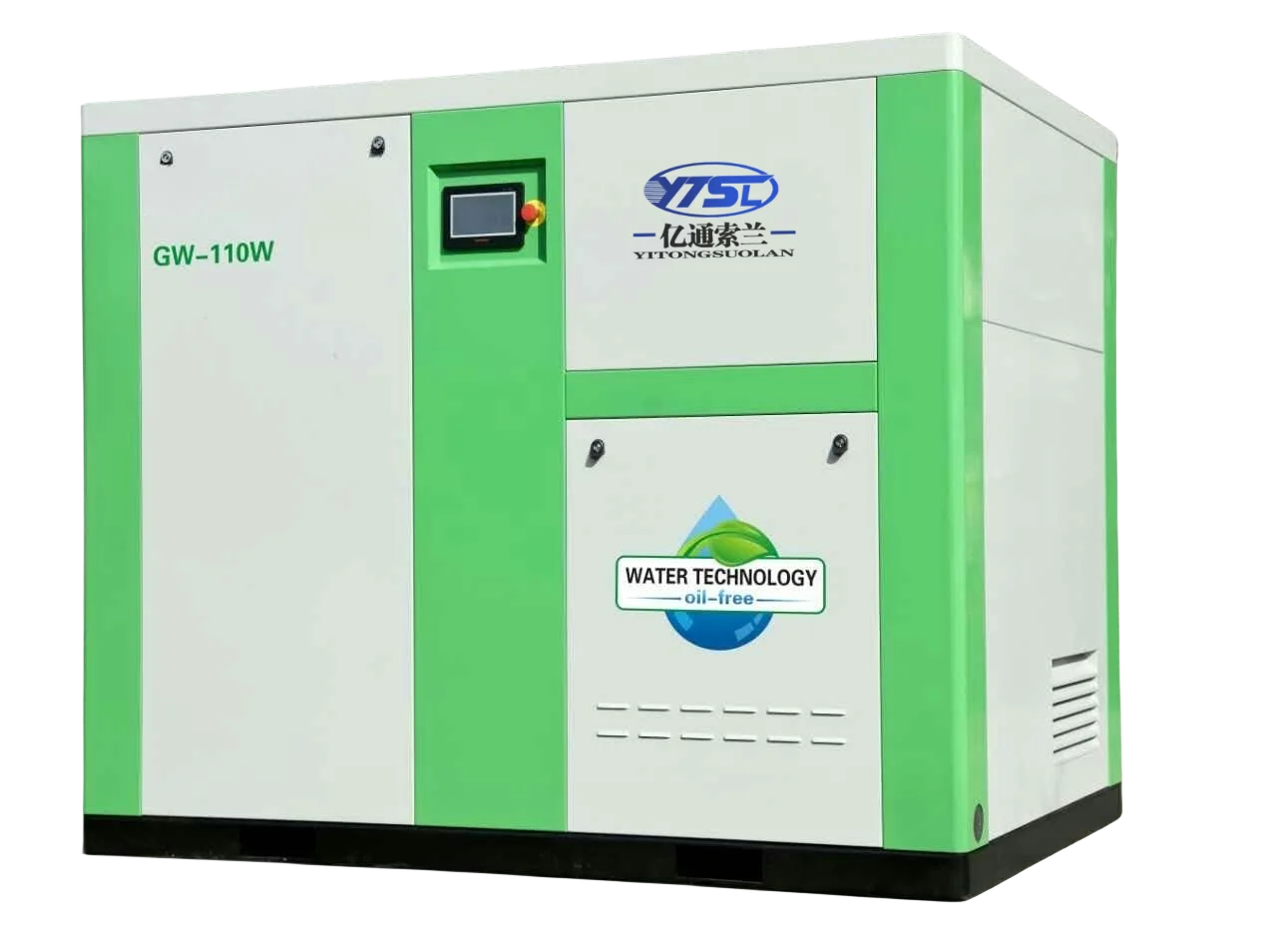
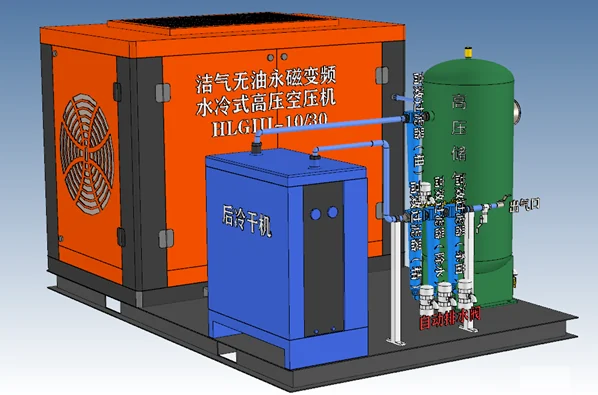
Complete compressed air system.
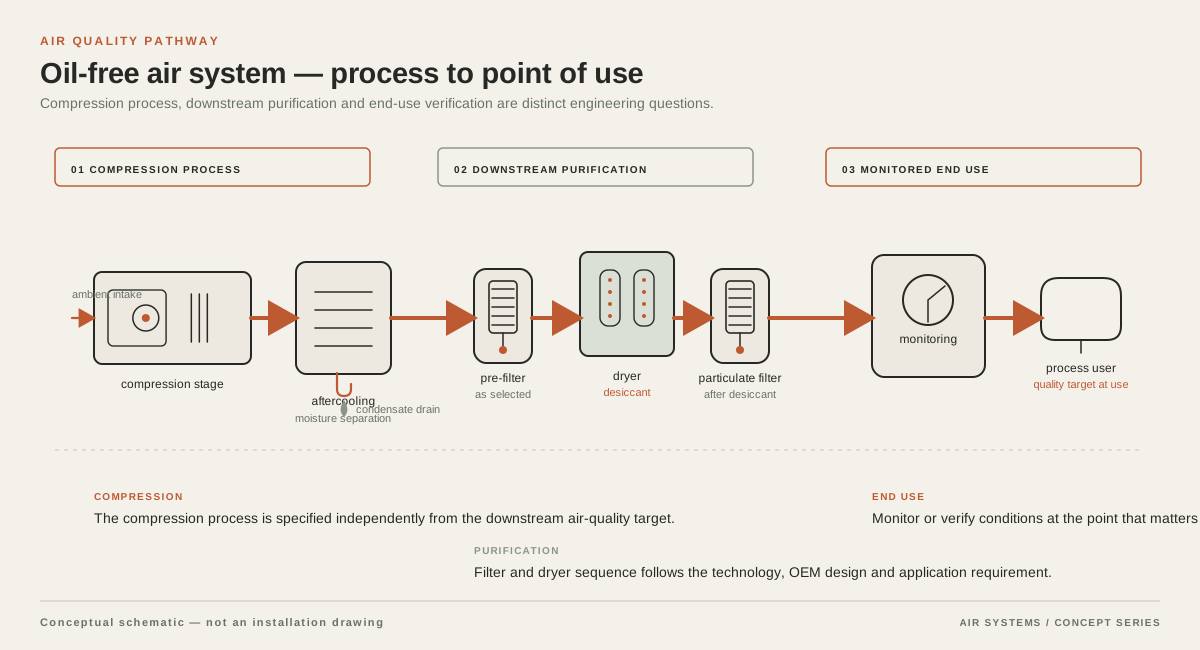
Combine compression, cooling, treatment, storage and distribution at the required pressure and point-of-use air quality. The layout below explains the system interfaces; it is not a photograph of an installed project.
DETAILED SELECTION & OPERATION
RFQ data for an oil-free or clean-air compressor system
Send the process description and the consequence of contamination first. State the required particle, water and oil limits, sampling location, test method and acceptance criteria. Then separate minimum, normal and peak demand, peak duration, operating hours, future allowance and standby flow. Give the pressure required at the user, distribution pressure, acceptable pressure drop and a defined reference basis for every flow value.
Also provide ambient temperature and elevation, cooling-water data if relevant, electrical supply, available floor area, ventilation, noise, drainage, operating hours, shift pattern, redundancy, controls integration and preferred delivery boundary. Ask each respondent to list included equipment, exclusions, assumptions and deviations from the requested quality or duty. This lets the buyer compare complete systems rather than a preliminary compressor headline.
Before award, obtain a final technical schedule that names the compressor technology, rated duty points, flow reference, pressure basis, ambient assumptions, treatment arrangement, utilities, noise, footprint, controls and maintenance obligations. Require the supplier to state whether each value is measured, calculated, typical or guaranteed, and whether an air-quality statement applies to the complete proposed system at the named point of use.
- Required purity: particle, water and oil limits; sampling location; test method; acceptance criteria.
- Demand profile: minimum, normal and peak flow; peak duration; operating hours; future allowance; standby requirement.
- Pressure and flow: point-of-use pressure, gauge or absolute basis, and FAD or another explicitly defined reference condition.
- System boundary: compressor, cooler, dryer, filters, receiver, drains, controls, installation and commissioning responsibilities.
- Evidence: exact-model datasheets, drawings, test reports, maintenance plan, warranty terms and all supplier assumptions.
SELECTION & OPERATION
Frequently asked questions
Which oil-free compressor configurations are published by Dezhou YITong?
The authorised company product display identifies dry oil-free low-pressure screw compressors, water-lubricated oil-free screw compressors, and clean-air medium/high-pressure compressor packages. It also describes a permanent-magnet variable-speed clean-air configuration. The dry and water-lubricated products have individual product records; verify the exact selected model and duty with the supplier.
Does an oil-free compressor guarantee ISO 8573-1 Class 0 air?
No. Oil-free compression and delivered-air purity are different questions. ISO 8573-1 classifies particles, water and oil at a stated measurement location. Any Class 0 or other purity claim needs applicable limits, test method, operating condition and evidence for the complete installed system. A component certificate or a compressor description is not assembly approval.
Can the clean-air medium/high-pressure package be specified as dry oil-free?
Not from the published description alone. The source describes air separation, refrigerated drying and cyclone treatment, and says the package can replace dry oil-free equipment. Request written confirmation of the actual compression air path and any lubricant arrangement before using a dry oil-free specification. Its published pressure bands are 5–16 bar (0.5–1.6 MPa) and 16–35 bar (1.6–3.5 MPa).
Do the published “10–60 cubic” and “1–20 cubic” figures give compressor flow?
They should not be treated as comparable delivered-flow ratings. The dry and water-lubricated product pages use those “cubic” specifications without a stated unit, time basis, inlet condition or FAD designation. Ask for the exact model's delivered flow and its stated reference conditions in the quotation.
Can an oil-free compressor run without filters or a dryer?
That depends on the required air quality, intake conditions and downstream process. Oil-free compression does not remove all particles or water, and the system may need cooling, separation, drying, filtration, drains and point-of-use stages. Select the treatment train from the specified contaminant risks, not from the oil-free label alone.
Technical references
- Dezhou YITong Product Display — page 2 ↗
Published product-card names, types, model fields, source images and the separate product-display description of the permanent-magnet variable-speed clean-air configuration.
- Dezhou YITong Dry Oil-Free Low-Pressure Compressor Series ↗
Dry oil-free low-pressure product type, 10–60 cubic field, 37–160 kW model field, permanent-magnet variable-speed configuration, dry oil-free air end, YE4 motor, IP23/IP55 options, published low-pressure label and authorised product photo.
- Dezhou YITong Clean-Air Oil-Free Medium/High-Pressure Compressor Series ↗
0.5–1.6 MPa and 1.6–3.5 MPa pressure bands, two-stage compression, added single-screw stage above 2.0 MPa, cooling options, and the stated refrigeration/cyclone treatment approach.
- Dezhou YITong Water-Lubricated Oil-Free Screw Compressor ↗
Water-lubricated oil-free product type, 1–20 cubic field, 15–132 kW model field, integrated-system description and authorised product photo.
- ISO 8573-1:2010 — Compressed air — Part 1: Contaminants and purity classes ↗
ISO 8573-1 specifies compressed-air purity classes for particles, water and oil independent of the location at which air is specified or measured, and identifies gaseous and microbiological contaminants.
- CAGI Compressed Air Purity Guide ↗
Compressed-air contaminants and the relationship between a stated purity requirement and the complete treatment system.